How Iowa's Water Got Here
How Iowa's Water Got Here
The story of tile drainage, fertilizer runoff, and a 60-year-old safety standard that's no longer adequate.
Iowa has the second-highest cancer incidence rate in the country. It's one of only two states where the rate is still rising. Sitting beneath those numbers is a slower, quieter story about what's in the water.
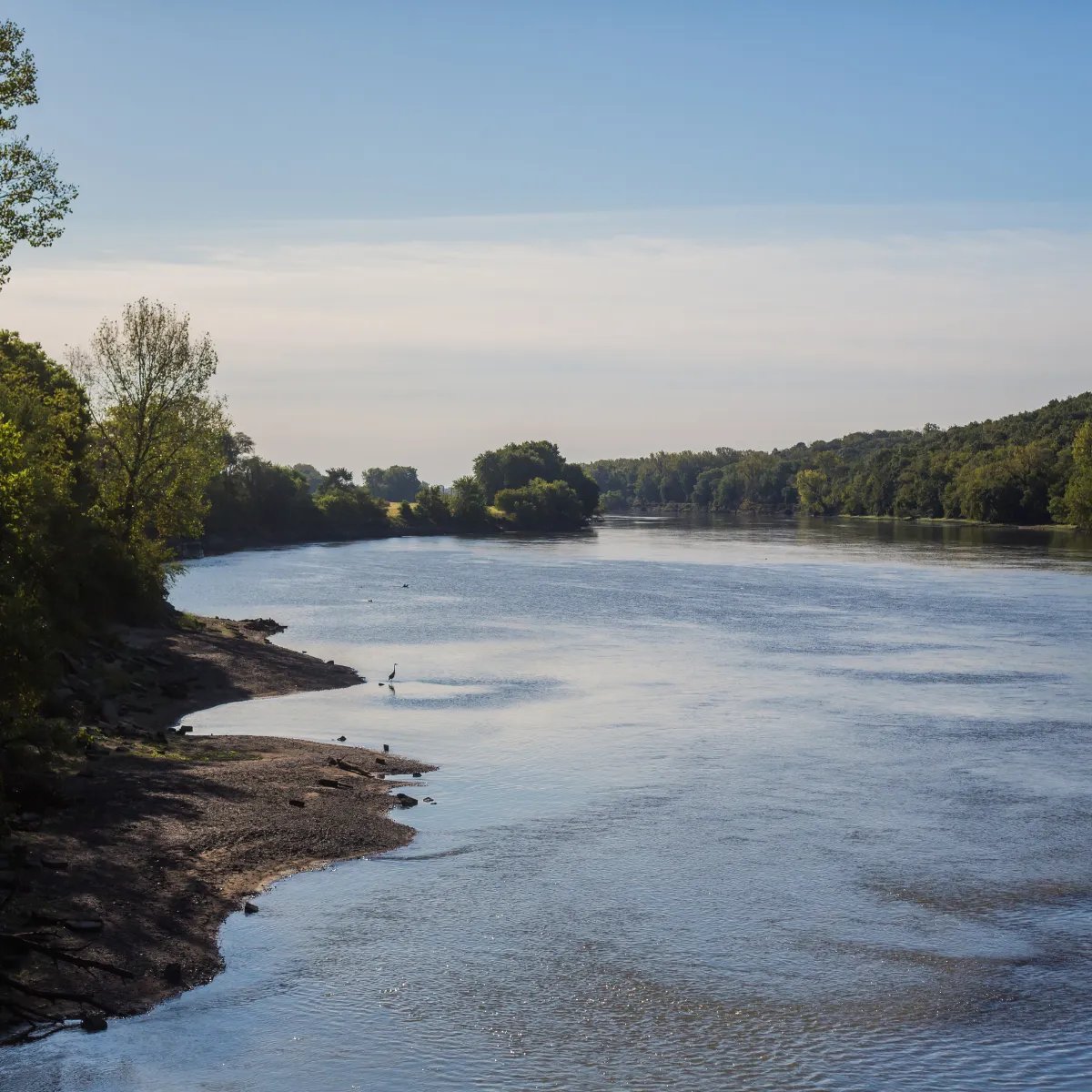
In June 2025, nitrate in the Raccoon River hit 19.39 mg/L — nearly double the federal safety limit of 10 mg/L. Central Iowa Water Works, the regional utility that supplies drinking water to 600,000 people across the Des Moines metro, ran its nitrate removal facility at full capacity for more than 60 straight days. At roughly $16,000 per day. And it still wasn't enough.
For the first time in the utility's history, residents were told to stop watering their lawns. Not because of drought — because of the opposite. Spring rains had returned after four years of dry conditions, and with them came a surge of nitrate from agricultural fields across the state. Without the ban, water coming out of central Iowa faucets would have exceeded federal limits.
The 2025 lawn watering ban was treated as a local story. It's not. It's a window into how a century of decisions reshaped the way water moves through Iowa, and why the problem is almost certainly going to get worse before it gets better.
It starts in the field
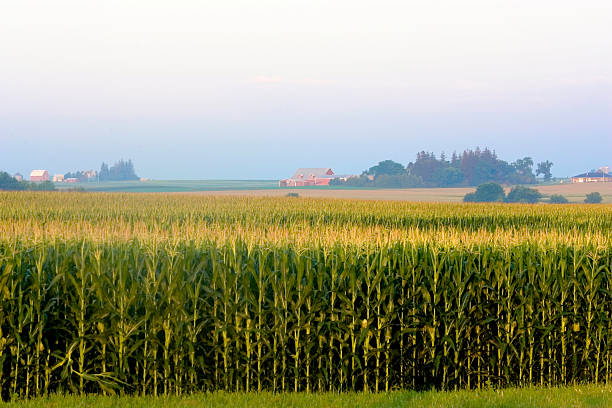
Roughly 80% of nitrate in Iowa's rivers originates from agricultural land.
Plants need nitrogen to grow. In Iowa, that nitrogen comes from three main sources: synthetic fertilizer applied to corn and soybean fields, manure from livestock operations, and naturally occurring nitrogen fixed by legumes like soybeans. Iowa farmers purchased 11.9 billion pounds of synthetic fertilizer in 2024 alone. Iowa livestock facilities generate another 109 billion pounds of manure a year — the state has more CAFOs than any other, roughly 2.5 times the next highest.
According to University of Iowa researchers, about 80% of the nitrogen in Iowa's rivers comes from agricultural land. The Central Iowa Source Water Resource Assessment, published in 2025, broke it down further for the Des Moines and Raccoon River watersheds: farm fertilizer contributes about 40% of the nitrogen load, nitrogen fixed by crops contributes about 22%, atmospheric deposition about 20%, and manure between 12% and 19% depending on the river. Municipal wastewater — often the easiest thing to blame — contributes less than 0.4%.
When it rains, the nitrogen dissolves into water moving through the soil as nitrate. In a natural system, that water would take weeks, months, or years to reach a stream, filtered along the way by wetlands and deep soil layers.
Iowa doesn't have a natural system anymore. The state has lost approximately 97.5% of its wetlands — from 4–6 million acres down to under 37,000.
How tile drainage changed everything
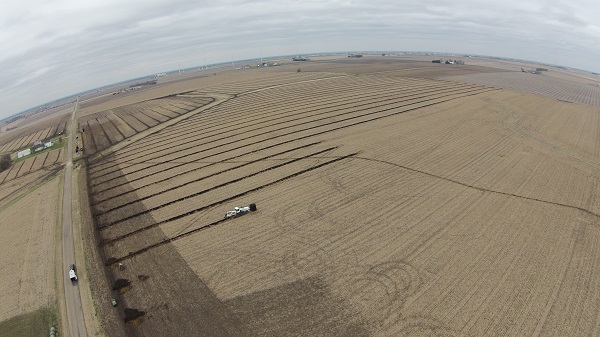
Perforated pipes buried 3–4 feet underground collect excess water and route it directly to streams, bypassing the natural filtration process entirely.
Before industrial agriculture, Iowa's prairie absorbed water like a sponge. Deep prairie root systems and wetlands held rainfall for months. Soil microbes had time to process nitrogen before it reached a stream.
Today, Iowa has roughly 13 million acres of subsurface tile drainage — more than any other state, 47% more than Illinois. These perforated plastic pipes, buried three to four feet beneath farmland, intercept the water that would have taken weeks or months to reach a stream and deliver it in hours or days. Over 75% of crop area in the Des Moines Lobe region uses tile drainage.
What took years, now takes hours. Nitrate has no time to be filtered. It moves directly from freshly fertilized fields to streams, to rivers, and eventually to the drinking water supply.
Around 1900, nitrate levels in central Iowa rivers averaged less than 1 mg/L. Today, yearly averages run above 6 mg/L. The Des Moines and Raccoon Rivers now rank in the top 1% of rivers nationwide for nitrate concentration.
The problem isn't going away
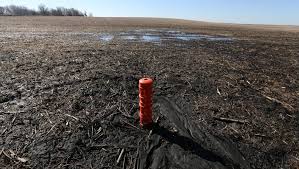
When rain returns after drought, nitrate stored in soil flushes rapidly through tile drainage.
2025 was a crisis year in central Iowa, but it wasn't an anomaly. Iowa Water Quality Information System researchers described 2025 as closer to normal hydrologic conditions. The low-nitrate years that preceded it were the outliers, caused by an extended drought that kept tile drainage from flowing.
When the rains returned, the system did exactly what it was designed to do: move water off the fields fast. And it took years of accumulated nitrogen with it.
This pattern — drought accumulation followed by wet-year flushing — is expected to intensify. Annual precipitation in Polk County increased 21% over 1950–2023, and days with rainfall over one inch increased 52%. Streamflow in the Des Moines and Raccoon Rivers has increased between 90% and 230% in the same period.
Even the conservation practices that work face a math problem. A single bioreactor — a woodchip-filled trench that filters nitrate from tile water — treats about 40 acres and costs around $15,000 to install. Iowa has 26 million crop acres. The Iowa Environmental Council has estimated that, at the current pace of conservation project installation, reaching the state's nutrient reduction goals would take up to 22,000 years.
And the problem has inertia even if inputs stop. Iowa State University research found that corn and soybean fields with zero fertilizer applied for six consecutive years still leached an average of 8 mg/L of nitrate through tile drainage — just 2 mg/L below the federal limit. The nitrogen is already in the soil. Even if every farmer stopped fertilizing tomorrow, the problem would persist for years.
Your water utility is fighting a losing battle
Central Iowa Water Works supplies drinking water to more than 600,000 people across the Des Moines metro, including Ankeny, West Des Moines, Johnston, Urbandale, Clive, Waukee, and surrounding communities.
Its flagship facility, the Fleur Drive Treatment Plant, can pump 75 million gallons per day. On a normal summer day, demand runs 70 to 80 million gallons.
The nitrate removal facility at Fleur Drive — built in the early 1990s and once the largest of its kind in the world — can treat just 10 million gallons per day. That's roughly one-seventh of peak demand.
When river nitrate levels spike above 10 mg/L, CIWW uses a blending strategy: water processed through the nitrate removal facility is mixed with conventionally treated water to bring the overall concentration below the federal limit. When both the Des Moines and Raccoon Rivers run hot simultaneously, as they did in 2025, the math stops working.
That's when the lawn watering ban happened. Lawn irrigation accounts for roughly 40% of summer demand. Eliminating it was, in the utility's own words, "the fastest, most efficient way to reduce demand" — the last mechanism available to keep treated water within legal limits.
CIWW has plans to expand treatment capacity by 25% over the next decade, adding 34 million gallons per day through new facilities and plant expansions. Estimated cost: $350 million. But those expansions are designed primarily for population growth, not escalating nitrate levels. The utility's executive director has been clear that their facilities are "nitrate resilient" but "not built based on nitrate removal."
Even in good years, the history is stark. Over the past two decades, nitrate in the Raccoon River has exceeded the 10 mg/L MCL an average of 79 days per year and exceeded 5 mg/L on more than 275 days in high years.
The blind spot: private wells
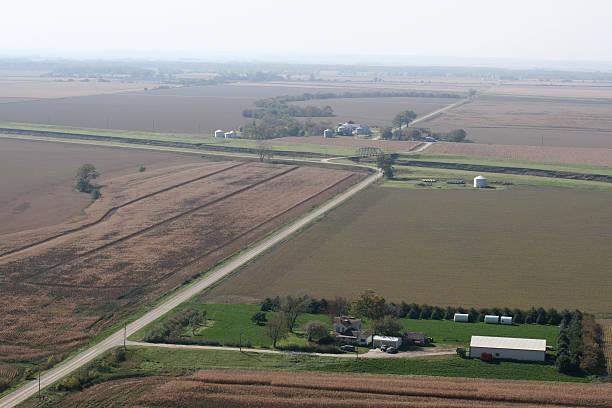
Iowa has approximately 330,000 private wells. None are subject to federal Safe Drinking Water Act regulations.
Roughly 330,000 Iowans get their water from private wells. Under the federal Safe Drinking Water Act, public water systems serving more than 25 people are required to test for nitrate and notify customers of violations. Private wells are exempt. There is no federal agency monitoring them, no required testing schedule, and no notification requirement if levels become unsafe.
The Iowa Department of Natural Resources offers voluntary testing, but participation is low. The Iowa Statewide Rural Well Water Survey found that 18% of rural private wells exceeded the 10 mg/L federal limit. More recent U.S. Geological Survey data found that in agricultural areas of Iowa, 21% of private wells exceeded the MCL. A separate statewide analysis using 2002–2017 data found 12% of Iowa private wells averaged at or above the 10 mg/L standard.
Shallow wells under 100 feet deep, and wells in the karst region of northeast Iowa, are at greatest risk. Of the most predictive factors for high nitrate in a private well, one of the strongest is distance to the nearest animal feeding operation.
Unlike public utilities, private well owners have no blending strategy, no emergency bypass, and no utility to call. When their well exceeds safe levels, the water coming out of their tap is the only water they have.
The data shows change is needed
The 10 mg/L maximum contaminant level for nitrate in drinking water was set by federal regulators in 1962, primarily to protect infants from methemoglobinemia — "blue baby syndrome" — a condition where nitrate interferes with oxygen transport in an infant's blood.
That standard has not been updated in over 60 years. Other health effects were not considered when it was established.
Since then, a substantial body of research has raised concerns about nitrate exposure at levels well below 10 mg/L:
A Danish nationwide cohort study following 1.7 million people over three decades found statistically significant increases in colorectal cancer risk at drinking water nitrate levels above just 0.87 mg/L NO3-N — roughly one-tenth of the current federal limit.
The Iowa Women's Health Study, which followed nearly 22,000 older Iowa women, found that women who drank water with nitrate above 5 mg/L for five or more years were 2.6 times more likely to develop thyroid cancer than women whose water never exceeded 5 mg/L.
The same cohort showed women whose water exceeded 5 mg/L for four or more years had 1.6 times the risk of bladder cancer.
A 2019 meta-analysis estimated that drinking water nitrate could account for 1,233 to 10,379 colorectal cancer cases per year in the United States — 1% to 8% of total U.S. cases.
A 2024 NHANES-based cohort study found that the mere detection of nitrate in drinking water was associated with 73% higher cancer mortality, even at levels below the EPA's MCL.
The International Agency for Research on Cancer has classified ingested nitrate, under conditions that result in endogenous nitrosation, as "probably carcinogenic to humans." The EPA restarted a human health assessment of nitrate in 2023 that could form the basis for updating the standard. No revision has yet been proposed.
The treated water flowing to Iowa taps at 7 or 8 mg/L is "safe" by the current standard. A growing body of research suggests that, over a lifetime of exposure, it may not be.
In-home protection
Reverse osmosis is a point-of-use technology that treats water right at the tap, regardless of what happens upstream, at the treatment plant, or in a well.
✓ Widely used. Reverse osmosis is a common in-home filtration technology for clean, great-tasting water.
✓ Practical. A point-of-use RO system installs under your kitchen sink and treats the water at the tap you drink from. No whole-house plumbing. No waiting for the city to upgrade its infrastructure. Most people can install ours in under an hour.
✓ Permanent. Unlike boiling (which actually concentrates nitrate) or pitcher filters (which don't remove nitrate at all), reverse osmosis works for every glass.
5% of every sale goes to Iowa water quality initiatives.
Sources
Central Iowa Source Water Resource Assessment (CISWRA). Currents of Change: Final Scientific Assessment of Source Water Research Report. Polk County, IA, June 2025.
Iowa Environmental Council & The Harkin Institute. Environmental Risk Factors and Iowa's Cancer Crisis. 2026.
Iowa Environmental Council. Nitrate in Drinking Water: A Public Health Concern for All Iowans. May 2024.
Central Iowa Water Works. 2025 Annual Water Quality Report and Stage III nitrate response communications.
Iowa Water Quality Information System (IWQIS) — Iowa State University. Iowa Nitrate Monitoring Network.
Schullehner, J., et al. (2018). "Nitrate in drinking water and colorectal cancer risk: A nationwide population-based cohort study." International Journal of Cancer 143: 73–79.
Ward, M.H., et al. (2010). "Nitrate intake and the risk of thyroid cancer and thyroid disease." Epidemiology 21(3): 389–395.
Jones, R.R., et al. (2016). "Nitrate from drinking water and diet and bladder cancer among postmenopausal women in Iowa." Environmental Health Perspectives 124: 1751–1758.
Temkin, A., et al. (2019). "Exposure-based assessment and economic valuation of adverse birth outcomes and cancer risk due to nitrate in United States drinking water." Environmental Research 176.
Mendy, A. & Thorne, P.S. (2024). "Long-term cancer and overall mortality associated with drinking water nitrate in the U.S." Public Health 228: 82–84.
Ward, M.H., et al. (2018). "Drinking water nitrate and human health: An updated review." International Journal of Environmental Research and Public Health 15: 1557.
Kross, B.C., et al. (1993). Iowa Statewide Rural Well Water Survey. Via Ward et al. 2010.
Iowa Department of Natural Resources. Wetland loss statistics, 1988 and 1990.
U.S. Environmental Protection Agency. "Nitrates and Nitrites." TEACH Chemical Summary.
Foundation Analytical Laboratory. Test reports #26-069-0236 and #26-069-0237 (SWI-600B+ nitrate reduction testing).